
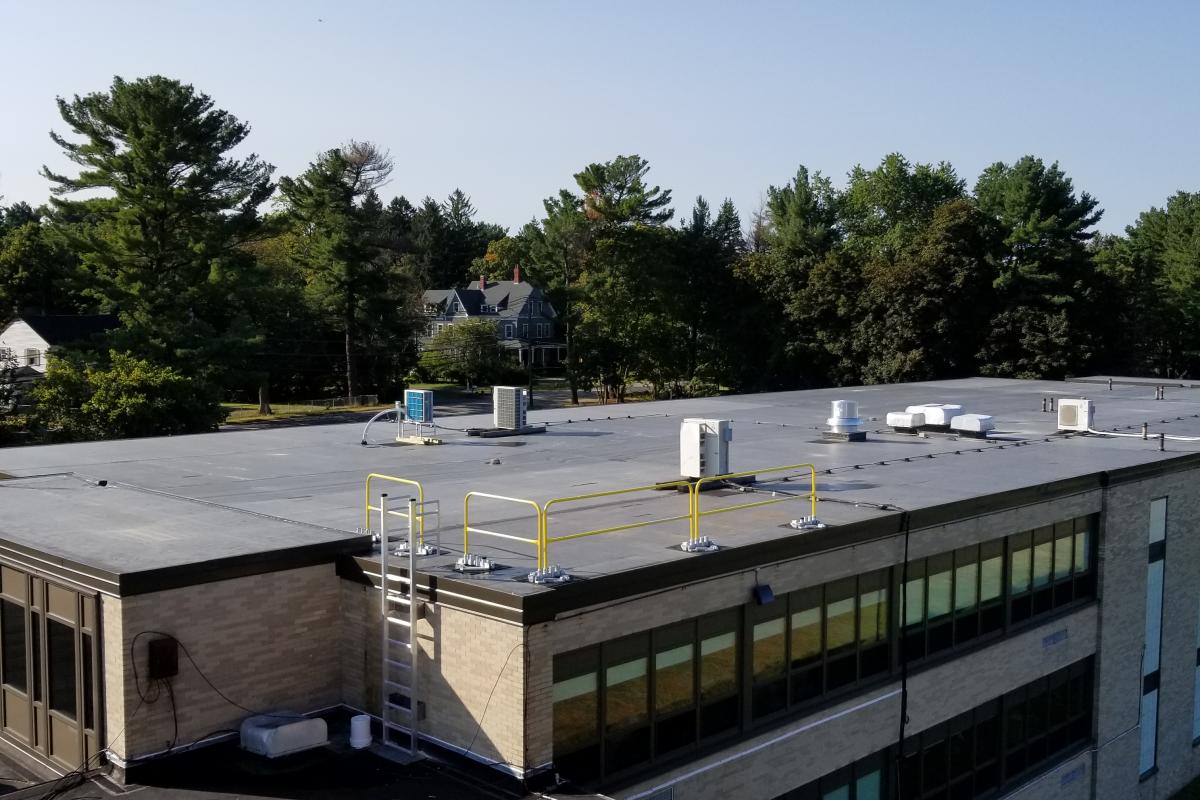
Government and Municipal Building Roofing Planning
Lubbock sits at the southern edge of the Texas Panhandle on the high plains, a position that subjects every government building roof in the city to a climate regime that swings from hailstorms severe enough to dent metal panels in June to blowing dust that scours membrane surfaces through autumn. The City of Lubbock owns and operates a substantial portfolio of municipal facilities—Lubbock City Hall on Texas Avenue, the Mahon Public Library downtown, numerous fire stations across the metro area, and the facilities supporting the Lubbock Police Department's patrol divisions. Procurement for capital roofing work on those buildings flows through the City of Lubbock's Purchasing and Contract Management Division, which advertises formal invitations to bid through the Texas Electronic State Business Daily as required by Texas Government Code § 252.041 for purchases exceeding $50,000.
Hail is the single most consequential weather threat to Lubbock government roofing systems, and the city sits within a region where insurance adjusters document large-loss hail events more frequently than almost anywhere else in the United States. The Lubbock fire stations on the west side of the city, which sit in areas that track severe storms moving eastward off the Caprock Escarpment, have sustained multiple hail-related roof losses in recent years. City specifications for re-roofing Lubbock municipal buildings have increasingly required UL 2218 Class 4 impact resistance ratings on all products applied to low-slope surfaces, and contractors who propose Class 3 materials based on lower material cost should expect those submittals to be rejected by Lubbock's Facilities Management Department without negotiation.
The flat terrain that defines the South Plains around Lubbock also means that wind exposure is unrelieved by topographic features, and roofing attachment specifications on Lubbock government buildings must account for ASCE 7 wind uplift calculations appropriate to an open, flat terrain category. Corner zones at fire station rooftops and the broad flat expanses of the Lubbock Memorial Civic Center roof are areas of concentrated uplift pressure, and manufacturers' standard attachment tables based on enclosed suburban exposure assumptions may be insufficient. Contractors who pull wind load calculations from generic product data sheets rather than performing project-specific uplift analysis have submitted Lubbock city bids proposing fastener patterns that would not satisfy the engineer of record's review, a mistake that surfaces during submittal review and forces costly re-specification after selection.
Texas does not have a statewide prevailing wage law, so Davis-Bacon Act requirements on Lubbock government roofing projects attach only when federal funding is involved. The City of Lubbock draws on federal Community Development Block Grant allocations for housing and neighborhood improvements, and some public facility upgrades in CDBG-eligible areas carry Davis-Bacon obligations. Lubbock also receives federal funds through various transportation and public safety grants that can trigger prevailing wage on specific capital projects. The city's Purchasing Division typically identifies federally funded projects in the bid advertisement, and contractors should confirm funding sources before bidding rather than discovering wage compliance requirements after selection when those obligations significantly affect labor cost assumptions.
The Lubbock Preston Smith International Airport authority and Texas Tech University operate significant building portfolios adjacent to the city's government buildings, and contractors working in Lubbock sometimes confuse procurement pathways when approaching projects on those campuses. Airport authority projects use Texas Transportation Code procurement frameworks that differ from city purchasing ordinances, and Texas Tech, as a state institution, procures construction through the Texas Facilities Commission framework with separate bonding requirements and insurance minimums. Clarifying which entity owns a specific building and which procurement authority governs it before investing in pre-bid preparation is essential in a city where these three large institutional roofing clients share a dense geographic footprint.
Lubbock's government buildings from the mid-20th century, including the original sections of City Hall and several fire stations built during the postwar municipal expansion period, represent roofing replacement projects where asbestos-containing materials in original built-up roofing components are a documented concern. Texas Department of State Health Services regulations governing asbestos abatement require accredited inspectors to sample materials before demolition begins, and abatement contractors must be licensed under the Texas Asbestos Health Protection Rules. Lubbock's recent city procurement documents for re-roofing older facilities have begun including pre-bid asbestos sampling reports as addendum documents, giving bidders actual material data rather than requiring them to price an unknown abatement scope, a practice that reduces bid variability and change order disputes on those projects.
Bonding requirements for Lubbock city roofing contracts are established by Texas Local Government Code § 252.002 and the city's own purchasing policy. Performance and payment bonds at 100 percent of contract value apply to public works contracts exceeding $100,000, and the surety must be authorized to do business in Texas. The city's standard contract forms were updated in recent years to align with Texas Department of Transportation bond form standards, and contractors submitting older bond form versions have experienced bid processing delays. Bid bonds of five percent accompany formal sealed submissions, and forfeiture of the bid bond is enforced if the selected bidder fails to execute the contract and deliver the required performance and payment bonds within the specified timeframe.
Lubbock's growing emphasis on energy efficiency in public buildings has been driven partly by Texas's deregulated electricity market, where city facilities managers track commercial electricity rates closely and view roofing insulation upgrades as quantifiable utility cost reductions. The Facilities Management Department has incorporated cool roof coating requirements and minimum insulation R-value increases into recent re-roofing specifications for city buildings, particularly those with high air conditioning loads like the Mahon Library and the recreation centers on the east and south sides of the city. Contractors who can provide energy modeling documentation showing projected utility savings from proposed insulation upgrades have found those submittals carry weight in Lubbock's value engineering discussions even on competitively bid projects.
Contractors targeting Lubbock government roofing work should register in the City of Lubbock's vendor database and monitor the Texas Electronic State Business Daily consistently, as the city's bid advertisements go live simultaneously on both platforms. Lubbock's Purchasing Division holds pre-bid conferences at the project site for larger roofing contracts, and site attendance is typically required for bidding eligibility on projects involving high-security facilities like the Lubbock Police Department's headquarters. Establishing relationships with Lubbock Facilities Management staff through successful smaller contracts—fire station repairs, library parking structure waterproofing, or city-owned recreation center maintenance—provides the documented local project history that evaluators prioritize when scoring experience on larger capital roofing procurements.
Next Step
Send the building address, roof age if known, leak photos or condition photos, roof access notes, tenant limits, and the decision timeline. We will shape the roof walk around public access, procurement records, and secure work areas and return a practical scope tied to what can be verified.