
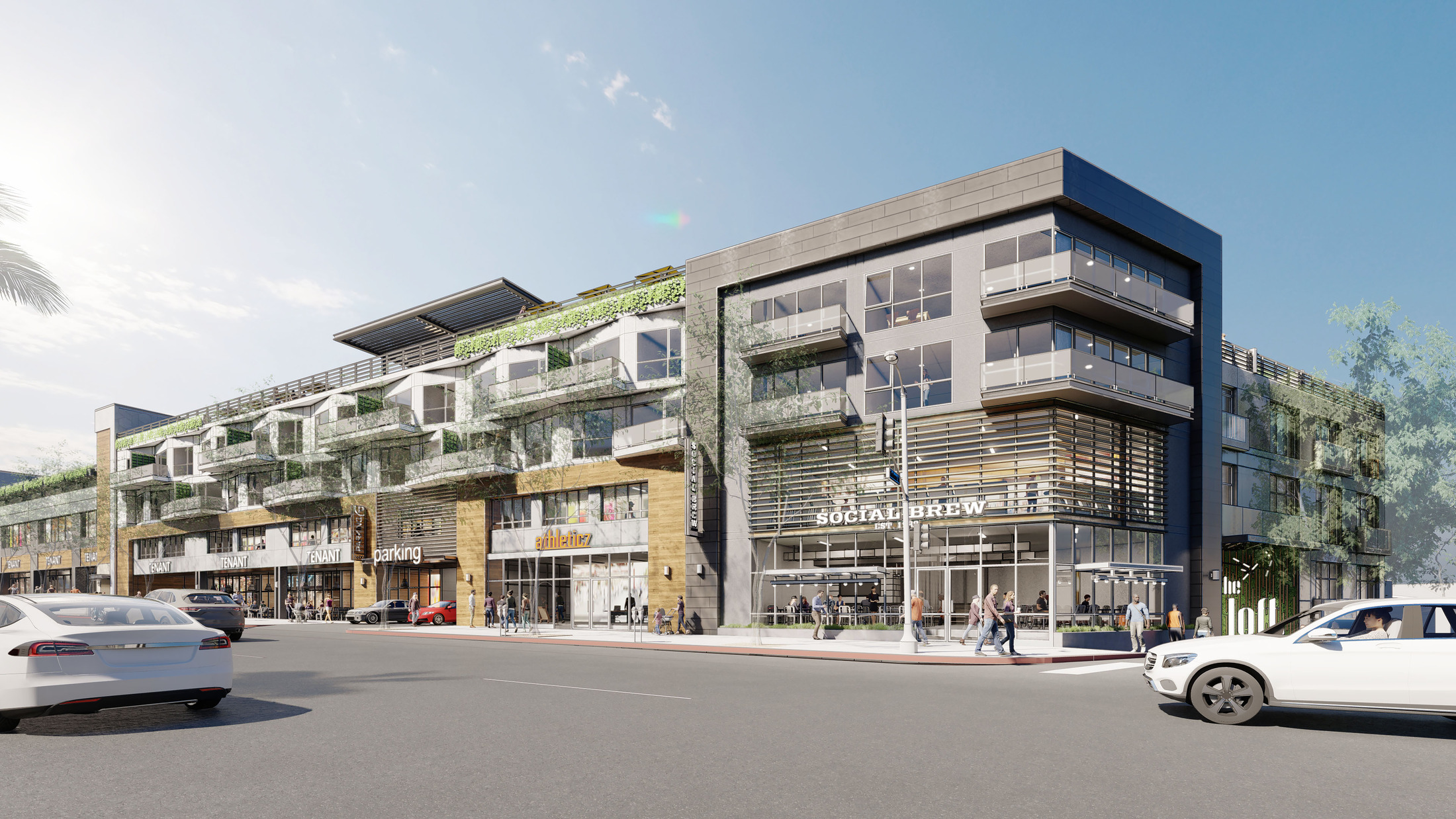
Mixed-Use Development Roofing Planning
Lubbock's mixed-use development scene is younger and more concentrated than in larger Texas metros, but the growth energy is real—centered on the Depot District's transformation from rail-adjacent industrial blocks into a restaurant and entertainment hub, the Texas Tech University corridor's ongoing push toward student-oriented mixed-use density along University Avenue, and the emerging redevelopment pressure on downtown blocks around the Buddy Holly Hall of Performing Arts and Sciences. The Hub City's transition from a commercial landscape dominated by single-story strip retail and office parks to a genuine urban mixed-use fabric is being driven by Texas Tech's expansion, the city's growing medical economy, and the taste of an emerging creative class that wants walkability that Lubbock hasn't historically offered. Roofing these buildings correctly means confronting the Southern High Plains' extreme weather honestly.
The Llano Estacado's climate is among the most demanding in North America for roofing systems. Lubbock experiences the full range of Texas weather: summer temperatures above 100°F with intense UV radiation and low humidity that desiccates exposed sealants and accelerates membrane surface oxidation, spring severe weather with large hail—Lubbock has recorded some of the largest hailstones documented in Texas—and occasional winter ice events that test flashing terminations. The combination of extreme heat, high UV, and large hail is particularly punishing for mixed-use roofing because the same exposure that makes membrane surfaces brittle also reduces their impact resistance exactly when a spring hailstorm tests it. We specify hail-rated TPO or modified bitumen assemblies with FM 4473 Class 3 or 4 impact resistance where the building's insurance carrier requires it, and we provide documentation of impact resistance ratings with every Lubbock project submittal.
Waterproofing at the podium-deck level on Lubbock mixed-use buildings faces the characteristic Texas High Plains paradox: the climate is semi-arid, meaning that roof membranes may go months without significant water exposure, followed by intense spring thunderstorm seasons that test every lap seam and construction joint simultaneously. This dry-wet cycle creates specific failure modes—sealants that dry and shrink during the long dry period open gaps that the first intense spring rain exploits. We specify fluid-applied waterproofing systems at podium-deck transitions because their continuous, seamless application eliminates the lap joints that dry-weather shrinkage opens, and we use elongation-rated materials that can accommodate the thermal movement generated by Lubbock's dramatic diurnal temperature swings without fatigue-cracking.
The wind environment on the Southern High Plains is a constant factor in Lubbock roofing specifications. The region's flat terrain and lack of windbreaks create sustained high wind conditions that are unlike the gust-dominated wind exposure of most other Texas markets. Wind uplift on mixed-use buildings in the Depot District and along University Avenue requires fully adhered roof membrane assemblies anchored to the structural deck at uplift resistance values specified against the Lubbock wind zone in the Texas Department of Insurance's windstorm design criteria. Edge metal must be fabricated and installed to resist the continuous wind-driven uplift that flat terrain generates, and we require pull-out testing of fasteners in the specific deck substrate before finalizing the attachment pattern rather than relying on generic design tables.
Green roofs in Lubbock face the most water-constrained climate of any market in this region. The Ogallala Aquifer's declining levels have made Lubbock acutely aware of water consumption in ways that eliminate the irrigation-dependent green roof approaches used in wetter markets. We design Lubbock green roofs using native High Plains plant species—buffalo grass, blue grama, drought-tolerant sedums, and low-water succulents—with growing media selected for the region's low rainfall distribution and extreme temperature range. These assemblies provide thermal mass benefits that reduce cooling loads on the residential units below, contributing to ASHRAE 90.1 compliance without creating ongoing water demand that conflicts with the city's water conservation programs and the regional conversation about sustainable use of the depleted aquifer.
Rooftop amenity decks on Lubbock mixed-use buildings must account for the wind exposure that makes outdoor dining and socializing uncomfortable during the area's frequent spring and fall wind events. Buildings in the Depot District and near Texas Tech's Marsha Sharp Freeway corridor are being designed with wind screens, pergolas, and partially enclosed roof terraces that make rooftop outdoor space viable for more than the calm summer evenings when the Southern High Plains' famous sunsets make Lubbock's rooftop views genuinely spectacular. These wind screen structures must be engineered for the site's design wind speed and anchored to the structural deck through waterproofing details that maintain membrane continuity at the post penetration locations.
Fire-rated assemblies on Lubbock mixed-use buildings follow the Texas State Fire Marshal's adopted edition of the IBC, and the City of Lubbock building department requires tested assembly documentation at commercial permit submission. The concentration of student-oriented housing above Depot District entertainment venues creates a mixed-occupancy scenario with specific fire-resistance requirements at the commercial-residential separation that go beyond standard retail-over-residential configurations. Assembly occupancy restaurants, late-night bars, and entertainment venues below student housing represent the highest fire-risk configuration in mixed-use classification, and we specify assemblies with tested hourly ratings from current directories that clearly document the components required to achieve the listed rating.
Sound isolation in Lubbock mixed-use buildings near the Depot District's entertainment venues is particularly important in a market where the student population creates a 24-hour noise environment that surprises developers accustomed to conventional retail-residential mixed-use projects. Live music, DJ events, and late-night bar activity below student apartments generate continuous bass exposure that penetrates standard floor-ceiling assemblies without specialized vibration isolation. Rooftop mechanical equipment serving entertainment venues on ground floors must be specified with spring isolation curbs and flexible duct connectors, and we recommend that the mechanical system serving the entertainment tenant be physically segregated from the residential system at the roof level to prevent vibration transmission through shared equipment support structures.
Long-term maintenance on Lubbock mixed-use roofing benefits from programs calibrated to the High Plains weather calendar. We recommend pre-severe-weather-season inspection in March or April, before the primary hail season in April through June, to document pre-existing conditions and identify sealant or flashing deficiencies that a hailstorm would exploit. Post-hail inspections should follow any storm where stone size of an inch or greater is reported in the Lubbock area, as membrane impact damage at those sizes begins to compromise waterproofing integrity. The flat terrain means that hail can travel significant horizontal distances during a storm, so inspections should cover all roof planes regardless of the direction from which the storm approached the building.
Next Step
Send the building address, roof age if known, leak photos or condition photos, roof access notes, tenant limits, and the decision timeline. We will shape the roof walk around roof evidence, access limits, weather exposure, and budget timing and return a practical scope tied to what can be verified.