
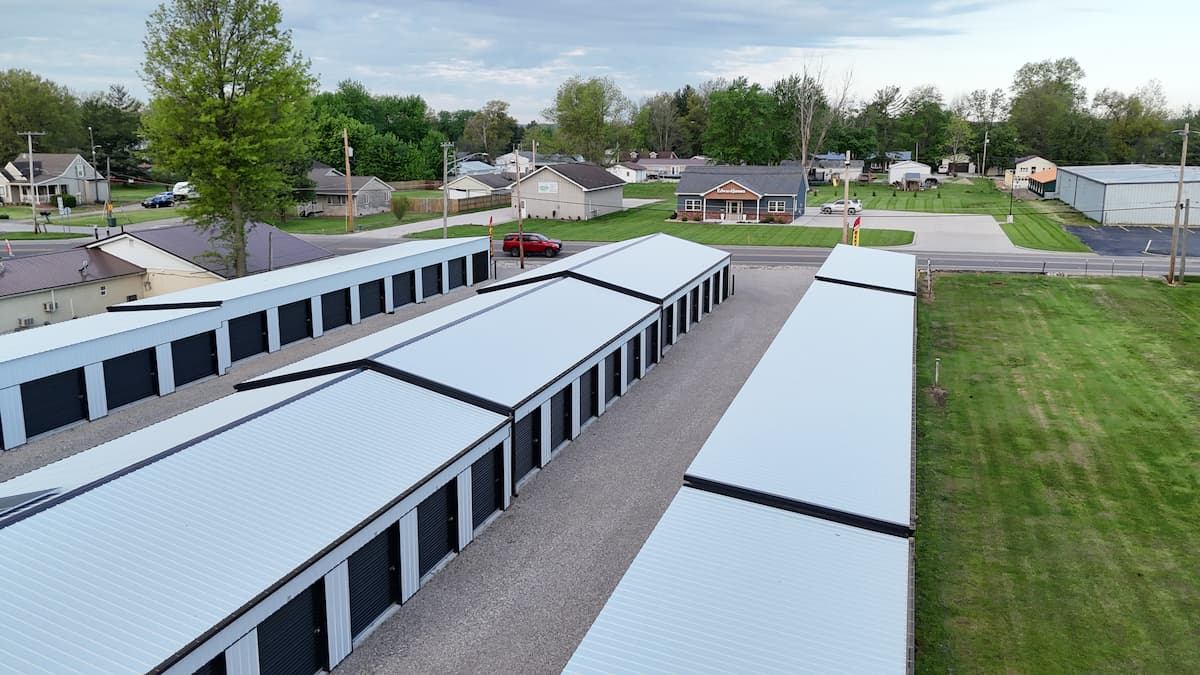
Self-Storage Facility Roofing Planning
Lubbock's self-storage market is dominated by large-format properties like those operated by StorageMart, whose West Texas facilities must contend with a roofing environment that combines fierce hailstorms, extreme heat, and the kind of desiccating West Texas wind that accelerates membrane aging faster than almost any other climate in the continental United States. StorageMart and other Lubbock storage operators who underestimate the severity of this climate pay for it in emergency repairs, insurance claims, and tenant attrition.
Hail is the primary acute roofing threat in Lubbock and Lubbock County. The South Plains of Texas consistently rank among the nation's most active hail corridors, and Lubbock has experienced multiple events with hailstones exceeding two inches in diameter within any given five-year period. A single severe hail event can puncture standard 45-mil single-ply membranes across an entire storage campus, destroying what would otherwise have been five to ten more years of service life. The business case for specifying impact-resistant membranes rated to FM 4473 Class 4 is straightforward in Lubbock: the premium over standard membrane is typically recovered in insurance savings and avoided emergency repairs within three to five years.
Heat and UV exposure in Lubbock is extreme by national standards. The city averages over 260 sunny days per year and summer temperatures regularly exceed 100 degrees Fahrenheit. A dark-surface membrane in this environment absorbs enough heat to raise roof surface temperatures above 170 degrees, accelerating oxidation of bitumen-based systems and contributing to thermal shock at lap seams and flashings as temperatures swing sharply after afternoon thunderstorms. High-reflectivity TPO or PVC membranes are not just an energy efficiency choice in Lubbock — they are a durability choice that materially extends membrane service life.
Wind uplift is a critical design parameter on Lubbock storage buildings. The Texas Tech Wind Science and Engineering Research Center is located in Lubbock for good reason: the South Plains routinely generate sustained winds and gusts that stress mechanically attached membrane systems. Fastener density on mechanically attached TPO or EPDM in this region should exceed standard specifications, and roof edge metal — the termination bar, drip edge, and parapet cap flashing — must be specified to FM 1-90 or higher uplift ratings. Wind-driven rain is a secondary concern, as gaps in edge metal allow water infiltration along the perimeter that is often misdiagnosed as a membrane failure.
Drainage on Lubbock storage properties is shaped by the city's semi-arid climate pattern: extended dry periods punctuated by intense convective storms that can deliver two inches of rain in less than an hour. The flat topography of the South Plains means that storm runoff has nowhere to go quickly, and storage facilities in low-lying areas of the city can experience ponding both on-roof and around the building perimeter simultaneously during a major event. Internal drain systems should be oversized, and detention requirements in the city's stormwater management ordinance should be factored into site drainage design.
Large-footprint storage properties in Lubbock often include drive-through covered parking and RV/boat storage structures in addition to enclosed buildings, and these covered open-air structures present unique roofing challenges. The metal roofing panels common on these structures are vulnerable to hail damage and require different maintenance protocols than membrane roofing. A comprehensive roofing inspection program for a Lubbock storage campus must address both enclosed building membrane systems and open-structure metal roofing.
Tenant protection during Lubbock re-roofing projects requires particular attention to debris management in windy conditions. West Texas wind can carry roofing debris — membrane scraps, insulation boards, fasteners — considerable distances, creating both a safety hazard and a liability issue if materials leave the property. Debris containment protocols, daily job site cleanup requirements, and perimeter protection screening are essential components of any Lubbock storage roofing contract.
HVAC equipment for climate-controlled units on Lubbock storage properties works harder than almost anywhere else in the country. The combination of extreme heat, low humidity, and strong wind places heavy demands on rooftop package units, which in turn means more vibration, more thermal cycling of penetration flashings, and more opportunities for condenser drainage to back up and pond on the membrane. Rooftop equipment maintenance and roof maintenance should be coordinated — an HVAC contractor who allows condensate to puddle on the roof membrane is shortening the membrane's service life.
Selecting a roofing contractor for a Lubbock storage campus requires verifying Texas contractor licensing, FM-rated product specifications, and specific experience with hail-event response in the South Plains market. A contractor with regional experience will understand the insurance documentation requirements that follow a hail event and will be positioned to provide damage assessment reports that support a property owner's insurance claim. This post-storm service capability is not standard across the industry and is worth specifically asking about during the selection process.
Next Step
Send the building address, roof age if known, leak photos or condition photos, roof access notes, tenant limits, and the decision timeline. We will shape the roof walk around roof evidence, access limits, weather exposure, and budget timing and return a practical scope tied to what can be verified.