
Airport Terminal & Aviation Facility Roofing Planning
Airport Terminal and Aviation Facility Roofing in Lubbock, TX
An airport never stops, and the roof has to be replaced without the operation stopping either. Flights, baggage systems, security screening, and ground crews run on a clock that does not pause for a tear-off, and every access point, material lift, and crew movement has to clear the airport's facilities department, the FAA Part 139 safety program, and in places TSA security. That coordination is the work, as much as the membrane is. We roof terminals and aviation facilities in Lubbock by building that planning into the scope before the contract is signed, because there is no improvising it once you are inside the fence.
Lubbock Preston Smith International Airport is the air gateway for the entire South Plains, serving a broad stretch of West Texas with service from the major carriers and a steady flow of passengers tied to Texas Tech University, the regional medical district, and the area's agricultural economy. Northwest of the city, Reese Technology Center, the former Reese Air Force Base, keeps an active aviation campus alongside its research tenants. Between the commercial terminal, the general aviation operators, the cargo and rental car facilities, and the reliever field at Reese, the Lubbock market generates consistent aviation roofing demand in one of the harshest climates in the state for a roof to survive.
Big, Flat, and Unforgiving of Drainage Mistakes
Terminal roofs tend to be vast low-slope expanses with minimal pitch, and that geometry makes drainage the whole ballgame. With so little slope across so much area, ponding tolerance is essentially zero, and water that sits on a terminal roof finds the weak point and stays there. We design drainage to actually move water off the deck, usually with tapered insulation that builds slope into a roof that was framed nearly dead flat. On a roof this size, getting the water management right is more important than any single material choice.
Wind and Jet Blast on the High Plains
Lubbock sits on the open High Plains, where sustained wind is among the strongest in Texas, and an airport roof takes that exposure with nothing to break it. Airside roofs add jet blast on top of ambient wind, which demands membrane adhesion and ballast specifications well beyond what a comparable warehouse would ever need. The South Plains hail corridor adds another layer of risk to a roof that large and exposed. We specify the attachment and surfacing for the real conditions: high uplift, jet-blast exposure where it applies, hail resistance, and the intense UV load of West Texas summers that bakes a low-slope roof year after year.
Dense Mechanical Loads and Complex Penetrations
Terminal HVAC is heavier and denser than standard commercial, because conditioning a large public concourse with constantly cycling crowds takes serious equipment. That means more curbed penetrations, larger units, and more flashing touchpoints than a typical building of the same footprint. We survey every penetration, curb height, and mechanical clearance before building the work plan, and we engineer the flashing for oversized equipment curbs and complex through-penetrations individually. A standard small-building flashing detail has no place on a terminal roof.
Aviation-Adjacent and General Aviation Structures
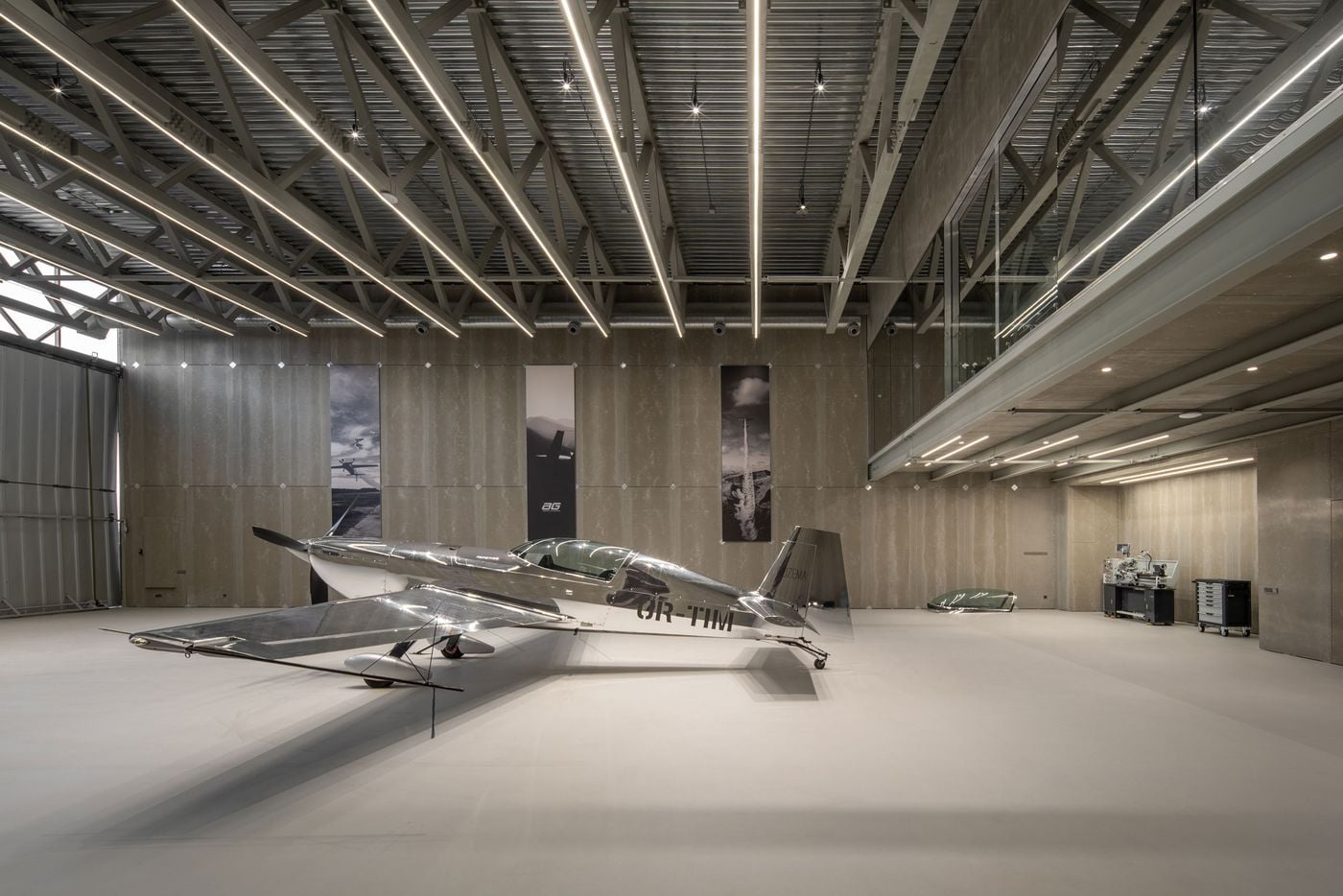
The terminal is only part of the campus. Cargo buildings, rental car centers, fixed-base operator hangars, aircraft maintenance facilities, and airport hotels each bring their own roofing challenges, and the badging and security requirement does not disappear just because you have stepped off the terminal roof. Our crews treat access authorization at any part of an airport campus as non-negotiable and plan for it rather than discovering it on site. General aviation work brings lighter security but often more demanding structures: high-bay hangars with large clear-span roofs need specific fastening patterns and seam geometry to handle the uplift those buildings generate in this wind environment.
Airport and Aviation Roofing Questions
How do you schedule work at an operating airport like Lubbock Preston Smith International?
We develop a phased work plan with the airport facilities department and the FAA Part 139 coordinator, with deliveries, crane lifts, and any airside work scheduled into approved windows and coordinated through the NOTAM process where required. We plan that coordination into the project from the start rather than treating it as an exception.
What roof systems suit large-span terminal roofs?
Most terminal re-roofing uses a reflective single-ply membrane over tapered insulation to fix drainage and eliminate ponding. New high-bay aviation structures and hangars are often standing seam metal. The right choice depends on the existing deck, load capacity, and operational constraints, which we assess by walking the roof with the facilities engineer.
How do you handle the density of terminal HVAC penetrations?
Terminal mechanical density runs well above standard commercial. Our preconstruction survey documents every penetration, curb height, and clearance before the work plan is built, and flashing for oversized curbs and complex through-penetrations is engineered individually rather than using standard small-building details.
Can you work on airside structures near active runways and aprons?
Yes, with full badging and in coordination with airfield operations. Airside work requires additional pre-planning and crew credentialing, which we build into the bid timeline, and we do not mobilize crew members without confirmed airside authorization.
Do you handle hangar roofing for general aviation and FBOs?
Yes. Hangar roofing, from a single-bay private hangar to a multi-unit FBO complex, is a regular part of our work in Lubbock. High-bay hangars built on wide-flange steel or pre-engineered systems require attention to their specific uplift and thermal movement, which we account for in the specification.
Next Step
Send the building address, roof age if known, leak photos or condition photos, roof access notes, tenant limits, and the decision timeline. We will shape the roof walk around secured access, long-span roofs, and logistics timing and return a practical scope tied to what can be verified.