
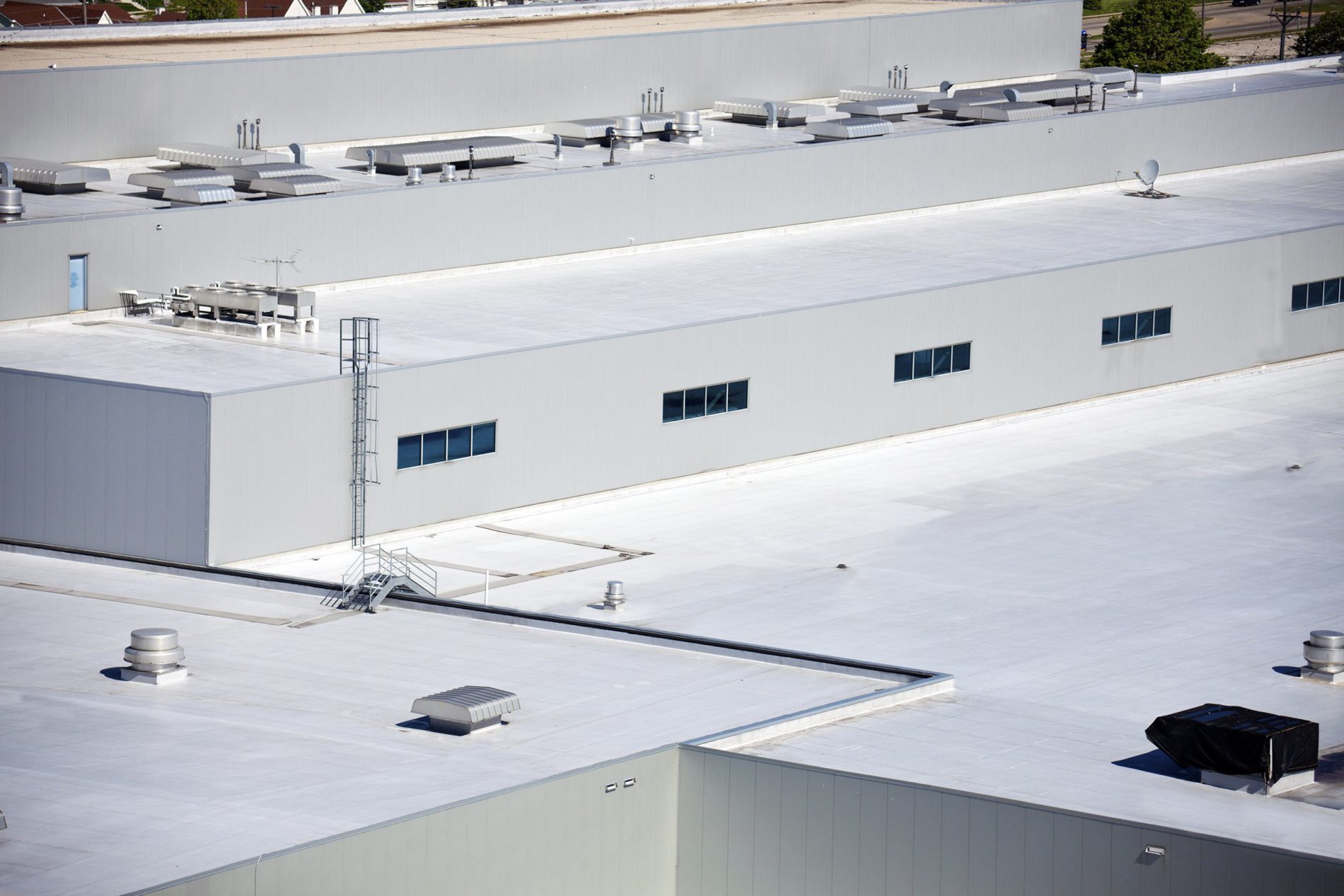
Manufacturing Facility Roofing Planning
Lubbock's industrial base — defined by agricultural processing giants like Plains Cotton Cooperative Association (PCCA), one of the nation's largest cotton marketing cooperatives, and the network of cotton gin equipment manufacturers, food processing operations, and oil field equipment fabricators that cluster around the South Plains economy — creates a distinctive commercial roofing demand profile. Agricultural processing and oilfield manufacturing operations in Lubbock impose chemical, thermal, and scheduling demands on roofing systems that differ from the automotive or aerospace manufacturing environments of larger metro markets, but are no less demanding from a technical standpoint.
Process equipment at Lubbock's agricultural processing facilities includes large-scale drying, pressing, and extraction systems that generate continuous heat and vapor loads on rooftop mechanical systems. Cotton gin facilities and oilseed processing plants operate during intense seasonal production runs, often running 24 hours a day for weeks at a time during harvest season. Rooftop exhaust systems handling humid, fiber-laden air create unique fouling conditions around fan housings and at penetration flashings. Contractors who have worked on agricultural processing roofs specify stainless-steel hardware at all penetration points and use smooth-surfaced cap sheets that are easier to clean and less prone to fiber accumulation than granule-surfaced alternatives.
Chemical fume exposure at Lubbock's oilfield equipment and agricultural chemical facilities requires careful membrane selection. Petroleum derivatives from oilfield equipment cleaning and testing operations, combined with pesticide and herbicide residues from agricultural chemical handling facilities, create a rooftop chemical environment that eliminates many standard commercial membrane formulations. Modified bitumen systems with polyester reinforcement and aluminum surfacing have a strong performance history in the West Texas petrochemical and agricultural chemical environment, and are the specification preference of most experienced Lubbock industrial roofing contractors.
Vibration from Lubbock's oilfield manufacturing and cotton processing facilities produces repetitive cyclic loading on roof structures that exceeds what most commercial buildings experience. Large hydraulic presses and automated ginning equipment run at high cycle rates during production, transmitting vibration through the building frame and into the roof deck. Experienced contractors assess vibration levels at multiple locations across the roof before finalizing fastening system designs, and specify mechanically attached membranes with engineered fastener grids rather than applying standard residential or light commercial fastening patterns.
Skylights on Lubbock's agricultural processing and oilfield manufacturing buildings require rugged, low-maintenance designs that can withstand both the mechanical stress of West Texas dust storms and the chemical deposits from production operations. Polycarbonate dome skylights with UV-stabilized finishes and heavy-gauge aluminum curb assemblies perform better in Lubbock's environment than glass-fiber or acrylic alternatives. The hail exposure in West Texas — particularly during the late spring thunderstorm season — makes impact-rated skylight glazing a sound investment that most Lubbock industrial building owners have learned from experience to specify.
Schedule coordination at Lubbock's cotton processing and agricultural facilities is tied directly to the harvest season, which runs from roughly September through December. During this period, facilities run continuously and cannot accept any interruption to production operations. Major roofing projects must either be scheduled during the spring and summer window before harvest begins, or designed and phased so carefully that they can proceed alongside production without any risk of interior contamination. Experienced Lubbock roofing contractors maintain staffing levels and material inventory that allow them to execute large projects in the compressed pre-harvest window.
Lubbock's weather creates roofing challenges that are distinct from both the Gulf Coast and the northern industrial belt. The South Plains receive minimal annual rainfall, but when storms arrive they can be intense. Hail is a persistent threat — Lubbock sits within one of the highest-frequency hail occurrence zones in the United States. Roofing systems that might last 20 years in a low-hail market can require complete replacement in Lubbock after a single severe hail event if they are not specified to meet appropriate impact resistance ratings. TPO and EPDM membranes at or above 0.060-inch thickness, combined with hail-resistant insulation cover boards, provide meaningful protection against the hail events that regularly affect the South Plains.
Wind is the other dominant weather force shaping roofing design in Lubbock. Open plains topography means that sustained winds of 30 to 40 mph are common, and gusts well above 60 mph occur multiple times per year. Rooftop equipment screens, parapet walls, and equipment anchorage systems must be designed for Texas Tech University's wind research center-documented uplift loads that apply to this specific geographic zone. Contractors who use generic national wind load tables rather than region-specific data underestimate the actual wind exposure on Lubbock industrial rooftops.
The long-term maintenance economics of industrial roofing in Lubbock favor periodic restoration over deferred replacement. Agricultural processing and oilfield manufacturing facilities in the region typically have tighter capital budgets than their counterparts in larger industrial markets, making the cost-benefit comparison between coating restoration and full replacement an important conversation. A properly applied elastomeric coating system on a structurally sound existing membrane can extend service life by 10 to 15 years at a fraction of replacement cost, provided the existing membrane is assessed honestly and the coating contractor follows manufacturer-specified surface preparation protocols.
Next Step
Send the building address, roof age if known, leak photos or condition photos, roof access notes, tenant limits, and the decision timeline. We will shape the roof walk around production schedules, rooftop equipment, and shutdown limits and return a practical scope tied to what can be verified.