
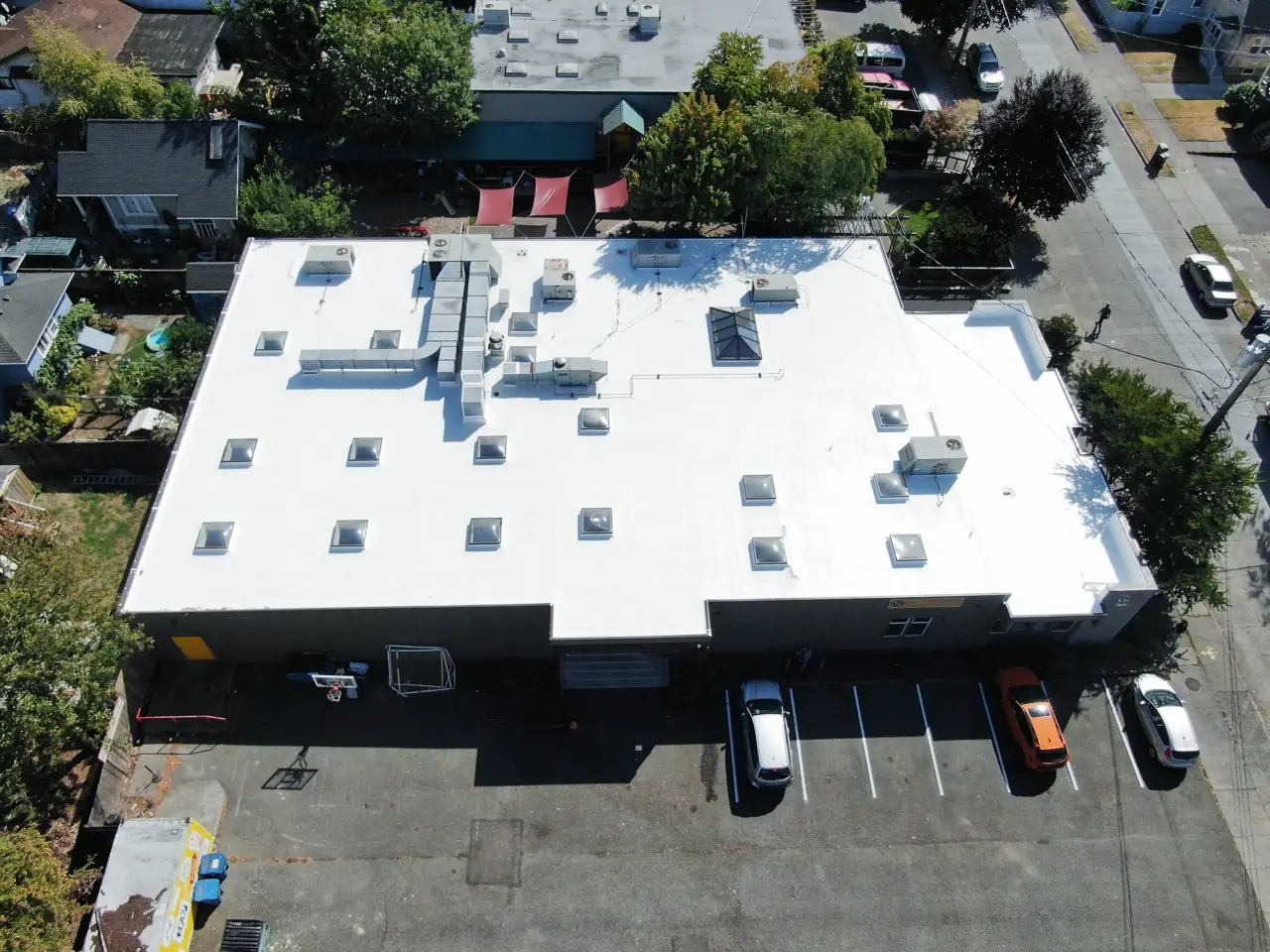
School and K-12 Educational Building Roofing Planning
Lubbock Independent School District serves over 28,000 students across more than 60 campuses in one of the most weather-challenging environments for school roofing in the United States — a South Plains climate where Class 4 hail is an annual possibility, summer temperatures exceed 100 degrees for weeks at a time, and sustained high winds create constant uplift pressure on every low-slope roof in the district's inventory. Commercial school roofing for Lubbock ISD requires Class 4 impact resistance, wind attachment designed for West Texas exposure, and the institutional project management discipline that keeps complex public school work on schedule and within budget.
Hail resistance is the dominant roofing specification criterion for Lubbock ISD schools. The South Plains sits at the center of one of the most active large-hail corridors in North America, with significant hail events occurring multiple times per decade. A Class 4 UL 2218 impact-resistant membrane is the minimum specification for any Lubbock school roof investment — Class 3 and lower products are inappropriate for this climate and will require premature replacement after the first major hail event. Many Texas school districts have learned this lesson through costly experience. We recommend Class 4 systems exclusively for Lubbock ISD schools and document impact resistance ratings in all project submittals.
Wind uplift design is equally critical on Lubbock school roofs. The flat terrain of the South Plains offers no windbreaks, creating sustained high-wind exposure conditions that require enhanced fastener density at all roof perimeter zones and corners. We calculate required uplift resistance to ASCE 7 standards for Lubbock's applicable exposure category and document the fastener schedule in project submittals reviewed by the district's facilities department. Under-fastened school roofs in West Texas have failed catastrophically during severe weather events, and Lubbock ISD deserves roofing specifications that reflect the actual wind risk of this environment.
Summer scheduling at Lubbock ISD is complicated by the district's extended learning and summer school programs, which keep students on campus at various locations throughout June and early July. We coordinate directly with each campus principal and the district facilities director to establish precise access schedules, identify which buildings or wings are occupied on which dates, and build safety protocols that keep roofing activity completely separated from any student presence. A daily coordination call with the campus contact is standard practice on all Lubbock ISD summer projects.
Texas public school procurement follows Education Code competitive bidding or competitive sealed proposal requirements for construction contracts above threshold values. Lubbock ISD solicits competitive sealed proposals for most roofing contracts, which allows the district to evaluate factors beyond price — contractor experience, project schedule, warranty terms, and references from comparable Texas school districts. We prepare detailed technical proposals that address all evaluation criteria and provide references from multiple West Texas school district clients.
District budget cycles at Lubbock ISD align with the Texas public school fiscal year running September through August. Capital improvement plans are developed through the spring board meetings and incorporated into the annual budget adopted in June. Projects authorized in the spring budget cycle proceed to solicitation in the fall for the following summer's construction. We participate in the planning phase by providing detailed scope assessments and budget estimates that help the district's facilities team develop accurate CIP projections.
Safety planning at Lubbock ISD campuses requires compliance with district construction safety standards that include daily safety tailgate meetings, required personal protective equipment for all crew members, and documented emergency response procedures for each campus. We assign experienced foremen on all Lubbock ISD projects and maintain safety training records for every worker on site. District facilities inspectors are welcome on site at any time, and we facilitate their access and address any observations promptly.
Reflective cool-roof membranes are both a performance recommendation and an energy efficiency measure for Lubbock ISD schools. A white TPO membrane keeps roof surface temperatures 50 to 70 degrees cooler than a dark modified bitumen surface on a West Texas summer day — reducing HVAC loads in school buildings that run air conditioning nine months of the year and directly lowering the district's energy costs. Texas State Energy Conservation Office programs have historically offered efficiency assistance for Texas public schools, and reflective roofing qualifies as an eligible efficiency measure.
Post-installation services for Lubbock ISD school roofing projects include a full joint inspection with district facilities staff, written punch list resolution, as-built photo documentation, and a maintenance manual covering drain clearing schedules, inspection protocols, and emergency repair procedures. We also register all manufacturer warranties in the district's name and provide copies of warranty documents to the facilities department for their permanent records — ensuring that future district facilities staff can readily identify warranty coverage and contact information for any school roof in our portfolio.
Next Step
Send the building address, roof age if known, leak photos or condition photos, roof access notes, tenant limits, and the decision timeline. We will shape the roof walk around occupied calendars, protected entries, and summer work windows and return a practical scope tied to what can be verified.