
What claim coordination covers
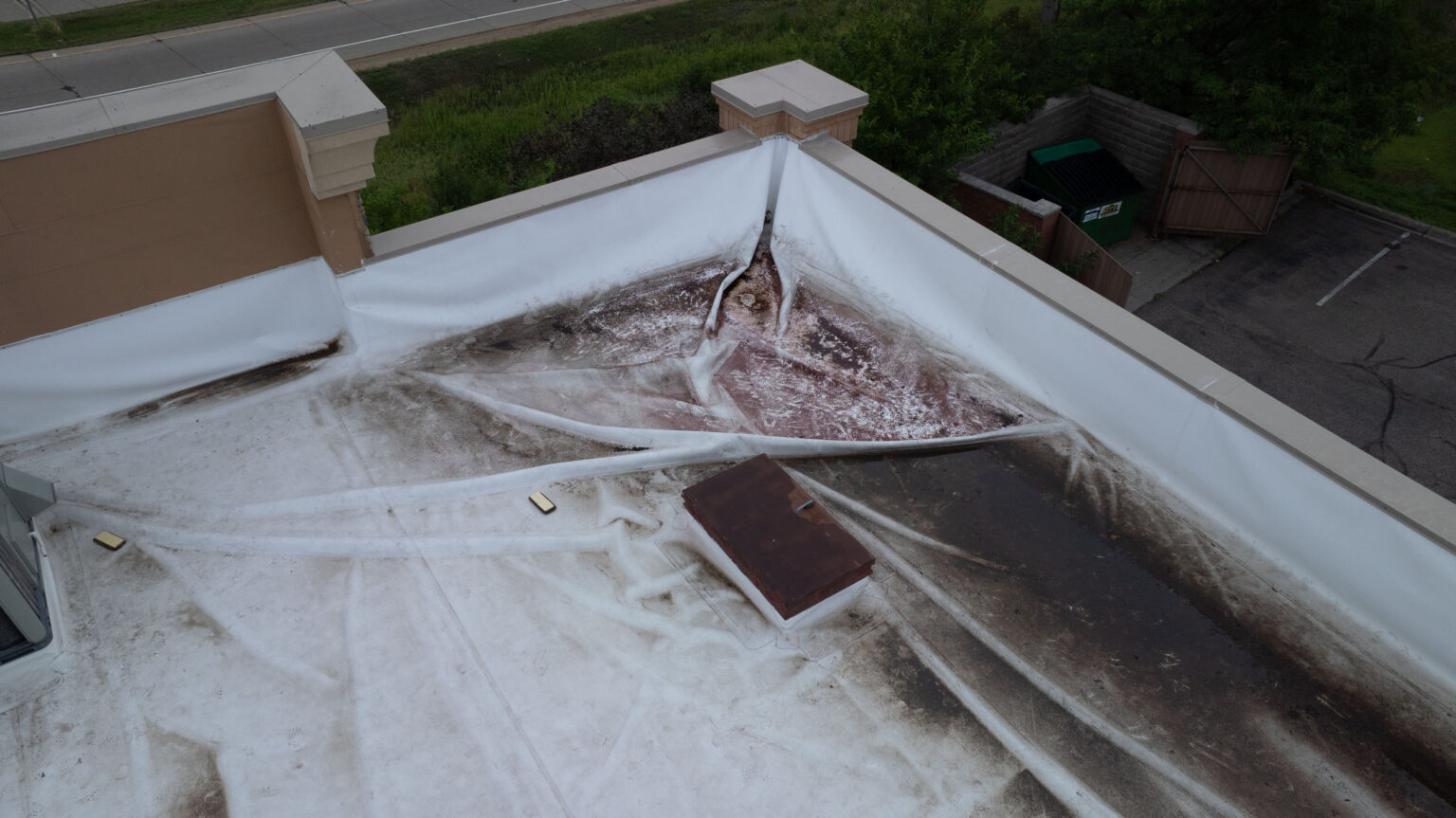
Coordination is the practical, roof-side work of getting a claim through inspection and documentation without gaps. Once you've reported a loss and a claim number is open, we schedule our own inspection promptly, walk the roof section by section, and build a photo and measurement record before the adjuster ever arrives. That timing matters — showing up to an adjuster visit with our own documentation already in hand means we're not seeing the roof for the first time at the same moment the adjuster is.
We track the pieces that tend to slip through the cracks on a busy claim: confirming the adjuster's appointment window, making sure the right person has roof access and any gate or badge credentials, keeping photo files organized by roof section rather than dumped into one folder, and making sure measurements are recorded in a way that matches how the roof is actually built — by section, by roof system, by drain zone.
Working around your property, not against it
Occupied buildings, active tenants, and limited roof access all shape how coordination actually plays out. On a multi-tenant retail strip, we plan roof access around business hours so contractor traffic doesn't disrupt customers. On a distribution building along I-27 or a Lubbock Business Park facility, we coordinate with dock schedules and forklift traffic so a roof inspection doesn't collide with a shipment. On a Medical District or healthcare property, we work around infection-control and access protocols. None of that changes what gets documented — it changes how we get to the roof to document it.
For properties with multiple roof sections or several buildings under one claim, we keep each section's documentation separate and clearly labeled. That separation matters when a claim covers, for example, a main building and an attached warehouse with two different roof systems and two different damage patterns — mixing that documentation together makes the file harder for anyone to use later, including your adjuster.
Meeting the adjuster and handing off the file
When the adjuster inspection is scheduled, we're on the roof at the same time, walking the sections we've already documented and answering questions about the roof system, its age, and any prior repair history we're aware of. After the inspection, we compile a final file: organized photos, a written damage description by roof section, measurements, and notes from the adjuster meeting. That file is yours — to keep for your records, to share with your broker, or to reference if a follow-up question comes up later in the claim process.
We're your roofing contractor, not a public adjuster — we document and substantiate the roof damage so you and your adjuster work from an accurate scope.
Frequently asked questions
What does insurance claim coordination mean for a roof?
For us, it means scheduling and running the roof-side parts of a claim: the initial inspection, the documentation package, and meeting the adjuster on the roof. It does not mean filing the claim or negotiating with the carrier on your behalf.
Who schedules the adjuster inspection?
Your insurer assigns and schedules the adjuster. Once you let us know the appointment window, we coordinate our own roof access and staffing to be there at the same time, so the inspection and our documentation line up.
Can you coordinate a claim across multiple buildings on one property?
Yes. For multi-building properties or a strip center with several roof sections, we keep documentation organized by building and roof section so each part of the claim stays traceable to the right roof.
What do you hand off at the end of coordination?
A complete file: photos organized by roof section, a written damage description, measurements, and notes from the adjuster meeting. You keep that file for your own records and to share with your broker or carrier as needed.
Get your claim's roof work coordinated
Send the building address, your claim number if you have one, and the adjuster's scheduled visit date. We'll get our own inspection done first and be ready when the adjuster arrives.
Next Step
Send the building address, roof age if known, claim number, leak or damage photos, roof access notes, and the adjuster's visit date. We'll shape our inspection around that timeline and return a documentation package tied to what can be verified.