
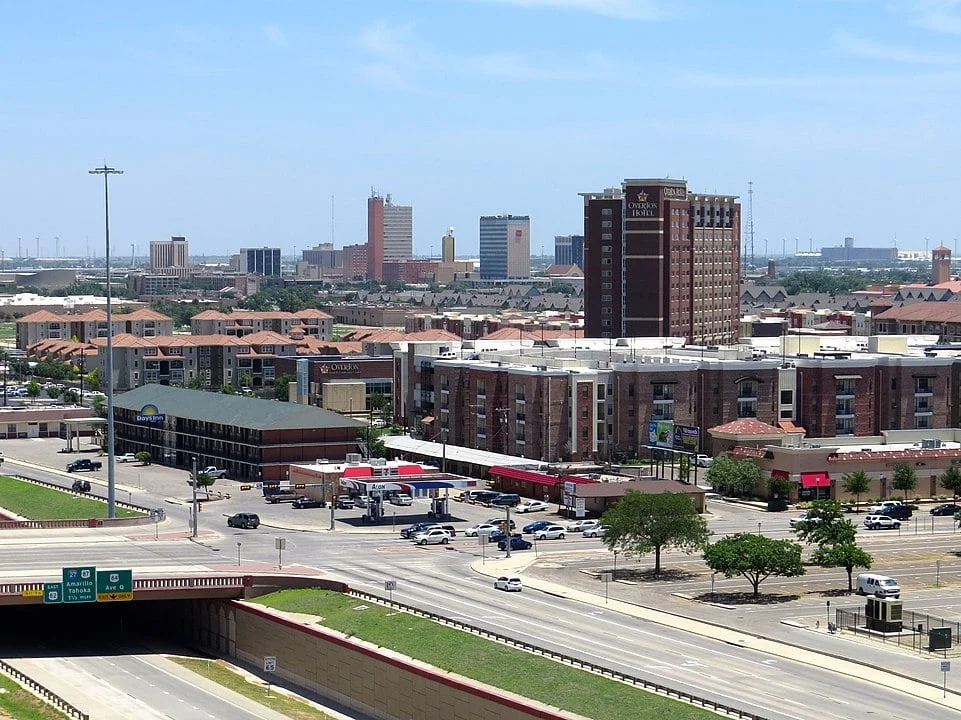
Wind is a year-round risk on the South Plains
Lubbock's flat, open terrain and elevation on the Caprock make it one of the windier metros in Texas, and that wind shows up in more than one form. Spring and summer bring severe thunderstorm complexes with straight-line wind gusts and, on the more severe days, tornado warnings. Dry spring conditions can also produce haboob-style dust storms — a wall of blowing dust driven by a gust front, sometimes with winds strong enough to move loose roof components and reduce visibility to near zero at ground level. Both event types stress a commercial roof, just in different ways.
Straight-line wind and tornado-warned storms tend to produce classic uplift damage: membrane lifted or billowed at the perimeter, fasteners backed out or popped through the deck, seams pulled apart, and coping or edge metal bent or torn loose. A haboob's damage profile is different — the wind-driven dust and sand can abrade coatings and exposed membrane, and airborne debris can puncture or tear at a lower wind speed than a straight-line event would need to cause the same puncture. Dust accumulation in drains and scuppers is also common after a haboob and can cause ponding that shows up days later, separate from the wind event itself.
What we document after a wind event
We start at the roof perimeter and corners, where uplift pressure concentrates first, checking edge metal fastening, coping seams, and membrane attachment along the roof edge before working into the field of the roof. We photograph lifted or separated seams, backed-out fasteners, torn or punctured membrane, and any rooftop equipment that shifted or lost its curb seal. Where debris caused the damage — a piece of another building's roofing, a tree limb, blown signage — we document the debris itself where it's still present, since that can matter to how a claim is classified.
For dust-storm events specifically, we check drains and scuppers for accumulation, look for abrasion patterns on coated roofs and exposed membrane, and note any reduced coating thickness at high-exposure areas. We also check rooftop unit housings and louvers, since dust infiltration can affect equipment even when the roof membrane itself is undamaged.
Structural damage beyond the roof
Severe wind events, especially tornado-warned storms, can affect more than the roof membrane — parapet walls, rooftop equipment mounts, and in some cases the deck or structure itself. When we see damage that looks structural rather than limited to the roof system, we say so and recommend an engineer or the appropriate trade get involved. We stay focused on the roof scope; we don't guess at structural conditions outside our expertise.
We're your roofing contractor, not a public adjuster — we document and substantiate the roof damage so you and your adjuster work from an accurate scope.
Frequently asked questions
Can a haboob dust storm damage a commercial roof?
Yes. The wind gusts that drive a haboob can lift loose edge metal, coping, and membrane laps, and blowing debris can abrade coatings and puncture membrane. The dust itself can also clog drains and scuppers, contributing to ponding after the storm passes.
What does wind uplift damage look like on a flat roof?
Wind uplift can show as lifted or billowed membrane, popped or backed-out fasteners, separated seams, and displaced insulation boards. It often starts at the roof perimeter and corners, where uplift pressure is highest, before it progresses toward the field of the roof.
Should we inspect the roof after every severe thunderstorm?
Not every storm, but any storm with a wind warning, reported gusts above roughly 50-60 mph, or visible debris on the property is worth a roof check. Catching uplift or membrane separation early can prevent a small repair from becoming a full section replacement.
Do you handle tornado-warned storm damage?
We document commercial roof damage from tornado-warned storms the same way we document any severe wind event: inspection, photos, and a written scope. For roofs with structural damage beyond the roof system itself, we'll flag what needs an engineer or another trade.
How fast can you get to a wind-damaged roof?
We prioritize active leaks and exposed roof sections after a wind event and can typically get a first look scheduled quickly. If the roof is actively taking water, ask about emergency tarp and dry-in while the claim documentation is being built.
Get your roof documented after a wind event
Send the building address, the storm date, and any photos of visible debris or damage. We'll schedule an inspection and document the wind and debris evidence for your claim.
Next Step
Send the building address, storm date, and any photos of visible damage or debris. We'll schedule an inspection, document uplift and debris evidence, and return a scope tied to what the roof shows.