
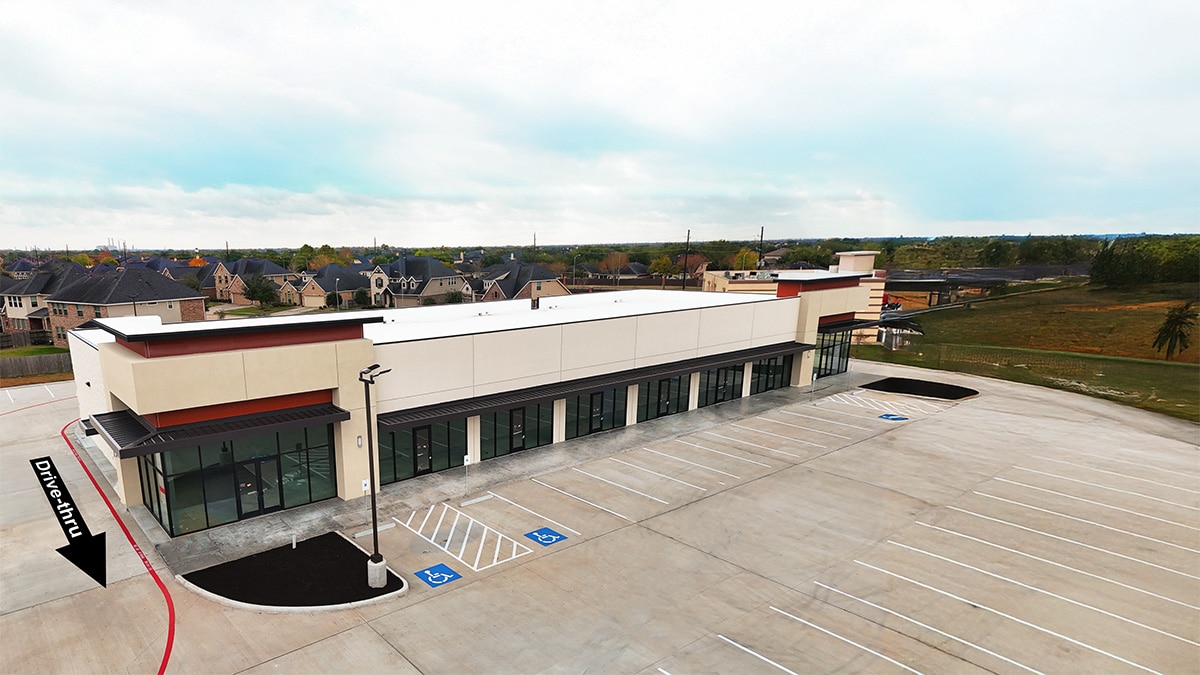
Retail and Shopping Center Roofing Planning
Lubbock's retail corridor runs primarily along 82nd Street, 50th Street, and the South Loop, with the major commercial concentration between Loop 289 and the tech university district anchoring significant shopping center density for the South Plains region. The city functions as a regional retail hub for a wide swath of West Texas, meaning its shopping centers and strip plazas draw from a trade area far beyond city limits—which translates to higher transaction volumes and more wear on the buildings that house those retailers. Lubbock's climate is one of the most demanding in Texas for flat roofing: intense sun bakes rooftop surfaces through nine months of the year, fierce spring thunderstorms deliver large hail and intense rainfall, and the persistent West Texas wind creates constant uplift stress on every membrane edge and flashing detail.
Hail damage is the defining roofing challenge for Lubbock retail property owners. The South Plains sits directly within the Tornado Alley hail corridor, and Lubbock experiences multiple hail events annually, with some storms producing golf ball-sized or larger stones that can pierce standard roofing membranes outright. The practical consequence for shopping center landlords is a recurring insurance and maintenance dynamic: post-storm inspections, damage documentation, insurance claims, and membrane repairs cycle through the calendar with regularity. Installing impact-resistant membranes—thicker TPO in the 80-mil or 90-mil range—on Lubbock retail properties provides meaningful hail resistance compared to standard 45-mil or 60-mil specifications, and insurance carriers may offer premium recognition for documented impact-resistant installations.
The West Texas sun subjects Lubbock retail rooftops to ultraviolet radiation intensity that exceeds most other major Texas markets, driven by the high elevation and low humidity of the South Plains. Roofing membranes and adhesives that perform well in Houston's Gulf Coast humidity may age differently in Lubbock's arid, high-UV environment. White TPO membranes retain their reflectivity and flexibility better than dark surfaces under these conditions, and the energy benefit of surface reflectivity is particularly pronounced in Lubbock where summer cooling degree days are substantial. Building owners along the 82nd Street retail corridor and the Marsha Sharp Freeway commercial strip should specify membranes rated for high-UV environments and verify that adhesive systems are compatible with the extreme temperature swings that Lubbock experiences from summer days to winter nights.
HVAC systems on Lubbock retail rooftops work extremely hard in the South Plains climate. Cooling loads during June, July, and August are intense, and the equipment runs for extended periods. Rooftop unit curbs must be properly flashed and maintained because the thermal cycling of equipment running in peak conditions—combined with the wind stress that is constant in Lubbock—puts cumulative stress on curb flashing details. Condensate management is also critical: units producing significant condensate during cooling season need proper discharge routing to prevent moisture from pooling against the membrane or migrating under flashing at the curb base. An HVAC and penetration audit conducted each spring, before the peak cooling season begins, allows Lubbock retail operators to identify and repair any issues before the equipment runs at maximum demand.
Lubbock's wind environment creates specific roofing specification requirements that differ from calmer markets. The persistent South Plains wind—averaging significantly higher than the national norm—applies constant uplift pressure to membrane edges, parapet coping, and any detail that isn't fully secured. Wind uplift design must meet the requirements of the applicable building code for the Lubbock wind zone, and on older retail buildings that predate current code requirements, upgrading the perimeter and corner fastening patterns is an important re-roofing consideration. Strip malls with parapet walls that extend above the roofline require particular attention to coping details, as improperly secured coping sections become dangerous projectiles during high-wind events and leave the parapet wall exposed to water infiltration when they blow off.
Lubbock's retail real estate includes a significant amount of older commercial inventory along corridors like 34th Street and the older 50th Street strip that predates the city's southward expansion. These properties often have roofing systems installed under previous codes and standards that don't meet current performance expectations. When a Lubbock landlord considers whether to re-roof an older property, the cost-benefit calculation includes not just the condition of the current membrane but also the opportunity to upgrade insulation to current energy code standards, address any structural deck issues identified during tear-off, and bring penetration and flashing details into compliance with modern specifications. A comprehensive re-roofing project on an older Lubbock retail asset is often the most efficient moment to resolve multiple building envelope issues simultaneously.
Strip mall properties in Lubbock face a distinctive tenant retention challenge related to roofing performance. The city's retail market is rooted in Texas Tech University enrollment patterns, which bring a large consumer base that expects well-maintained retail environments. Tenants in properties along University Avenue and the areas surrounding the TTU campus report maintenance issues to their corporate facilities teams, and repeated roofing leaks can influence a chain's decision to renew or relocate at lease expiration. Landlords who invest in proactive roofing maintenance and communicate that commitment to their tenants build the kind of relationship that supports lease renewal conversations—a practical business reason for roofing investment that goes beyond simple building preservation.
Drainage on Lubbock retail roofs must account for the pattern of South Plains rainfall: infrequent but often intense, with cloudbursts that deposit several inches in under an hour during summer thunderstorm season. Roof drainage systems designed for average conditions may be overwhelmed by peak storm events, particularly if drain maintenance has been deferred and debris accumulation has partially restricted capacity. Emergency overflow scuppers, sized to handle the difference between design storm flow and maximum rainfall rate, provide a critical safety valve on large Lubbock retail rooftops. Their positioning, sizing, and condition should be verified during every annual roofing inspection.
Re-roofing projects on occupied Lubbock retail properties require careful scheduling around the academic calendar and the South Plains retail cycle. The back-to-school shopping surge in August and the holiday season from October through December represent periods of peak retail traffic when construction activity adjacent to storefronts is particularly disruptive. Scheduling major roofing work in the spring—after the holiday period but before the summer heat peaks—gives Lubbock contractors the best combination of workable temperatures, acceptable hail and storm risk, and minimal conflict with the retail calendar. Proactive scheduling with the contractor in January or February ensures project slots before the spring construction season books up.
Next Step
Send the building address, roof age if known, leak photos or condition photos, roof access notes, tenant limits, and the decision timeline. We will shape the roof walk around tenant access, storefront protection, and customer traffic and return a practical scope tied to what can be verified.